Appleton's Cyclopedia of American Biography, edited by James
Grant Wilson, John Fiske and Stanley L. Klos. Six volumes, New York: D. Appleton
and Company, 1887-1889 and 1999. Virtualology.com warns that these 19th Century
biographies contain errors and bias. We rely on volunteers to edit the historic
biographies on a continual basis. If you would like to edit this biographyplease
submit a rewritten biography in text form.
If acceptable, the new biography will be published above the 19th Century
Appleton's Cyclopedia Biography citing the volunteer editor
Virtual American Biographies
Over 30,000 personalities
with thousands of 19th Century illustrations, signatures, and exceptional life
stories. Virtualology.com
welcomes editing and additions to the
biographies. To become this site's editor or a contributor
Click Here
or e-mail Virtualology here.
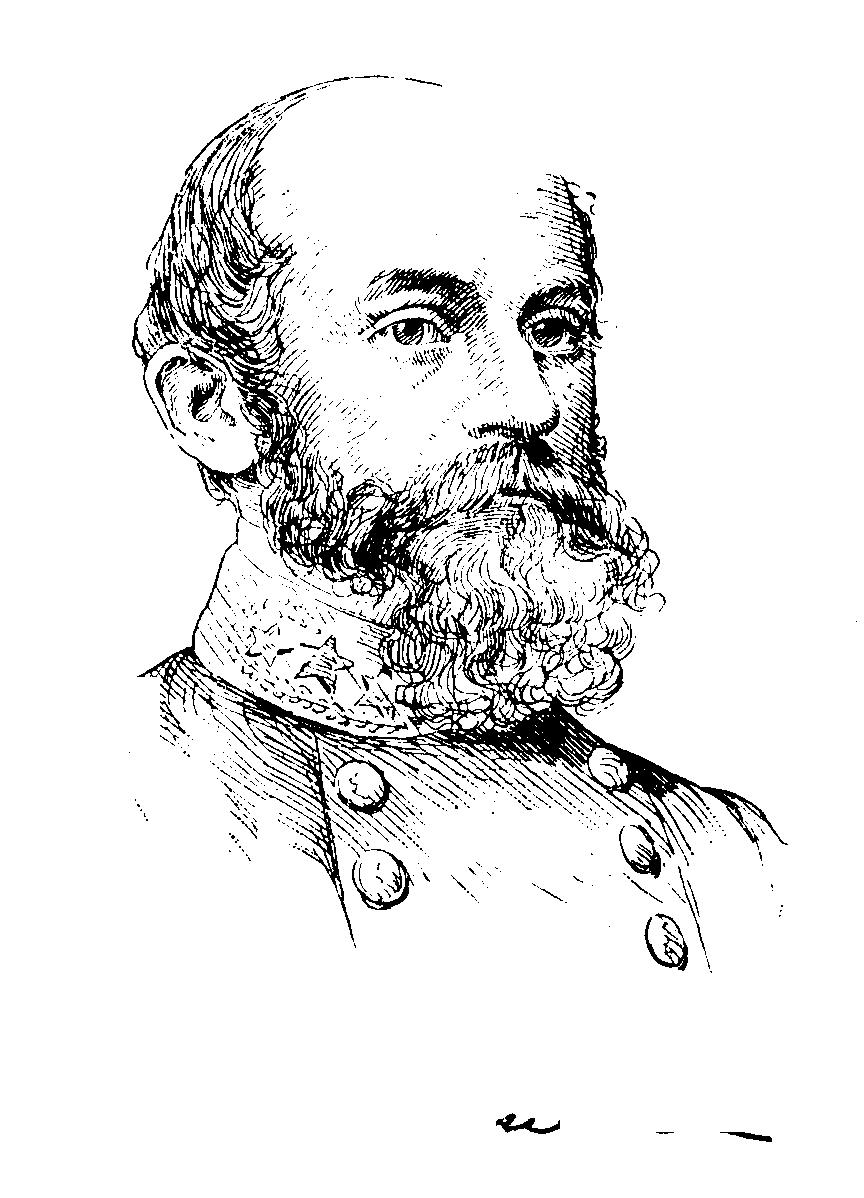
EWELL, Benjamin Stoddert, soldier and educator, born in Washington, D. C., 10 June 1810. He is a grandson of Benjamin Stoddert, first secretary of the navy. He was graduated at the U. S. military academy in 1832, and assigned to the 4th artillery; he served in the military academy as assistant professor of mathematics in 1832'5, and as assistant professor of natural and experimental philosophy in 1835'6, when he resigned. From 1836 till 1839 he was one of the principal assistant engineers of the Baltimore and Susquehanna railroad. He was professor of mathematics at Hampden Sidney from 1840 till 1846, when he was elected to the Cincinnati professorship of mathematics and military science in Washington College, Lexington, Virginia, which office he held two years. In 1848 he was elected professor of mathematics and acting president of William and Mary, and became president in 1854. He held this office till the beginning of the civil war, when the College was suspended. He then served in the Confederate army as colonel of the 32d Virginia regiment in 1861'2, and afterward was appointed adjutant general to General Joseph E. Johnston, when he commanded the departments of Tennessee and Mississippi.
He was again elected president of William and Mary in 1865, and still (1887) retains the office. The degree of LL.D. was conferred on him from Hobart College in 1874. He was made an honorary member of the Royal historical society of Great Britain in 1880. Dr. Ewell urged the election and reelection of General Grant to the presidency because of his moderation and magnanimity at the close of the civil war. He was opposed to secession in 1861, thinking it unnecessary and unconstitutional, and resisted the measure until war was waged. Since 1865 he has exerted himself to foster harmony between the north and the south, and loyalty to the National government. He spoke in the House of Representatives at Washington on 1 April 1874, and again on 25 January 1876, in support of the petition of William and Mary college for an appropriation on account of the destruction of its buildings and property during the civil war.
His brother, Richard Stoddert Ewell, soldier, born in Georgetown, D.C., 8 February 1817; died in Springfield, Tennessee, 25 January 1872, was graduated at the U. S. military academy in 1840. His first experience of actual warfare was obtained in Mexico, where, in August 1847, he was engaged at Contreras and at Churubusco. He was promoted to captain, 4 August 1849, and in June 1857, won distinction fighting against the Apaches in New Mexico. When the civil war began, he resigned his commission, entered the Confederate army, and was actively engaged throughout the war. He was promoted to the rank of major general, and fought at Blackburn's Ford, 18 July 1861, and at Bull Run, 21 July. In the following year he distinguished himself under Jackson, by whom he was greatly trusted, and took an active part in the various movements preceding the second battle of Bull Run, losing a leg at Warrenton Turnpike on 28 August 1862. He took part also in the Maryland campaign. When General Jackson was fatally wounded at Chancellorsville, Ewell, at his request, was promoted to lieutenant general, and assigned to the command of the 2d corps. At the head of Jackson's veterans he fought valiantly at Winchester, at Gettysburg, and at the Wilderness on the Confederate left. Sheridan at Sailor's Creek captured him, with his entire force, 6 April 1865.
After the war he retired to private life. General Grant says in his "Memoirs": "Here " [at Farmville] "I met Dr. Smith, a Virginian and an officer of the regular army, who told me that in a conversation with General Ewell, a relative of his " [who had just been made a prisoner], " Ewell had said that when we had got across the James River he knew their cause was lost, and it was the duty of their authorities to make the best terms they could while they still had a right to claim concessions. The authorities thought differently, however. Now the cause was lost, and they had no right to claim anything. He said further, that for every man that was killed after this in the war, somebody is responsible, and it would be but very little better than murder. He was not sure that Lee would consent to surrender his army without being able to consult with the president, but he hoped he would." Grant says this gave him the first idea of demanding the surrender.
Another brother, Thomas Ewell, was killed at the battle of Cerro Gordo, Mexico, in 1847.
Unauthorized Site:
This site and its contents are not affiliated, connected,
associated with or authorized by the individual, family,
friends, or trademarked entities utilizing any part or
the subject's entire name. Any official or affiliated
sites that are related to this subject will be hyper
linked below upon submission
and Evisum, Inc. review.
Please join us in our mission to incorporate The Congressional Evolution of the United States of America discovery-based curriculum into the classroom of every primary and secondary school in the United States of America by July 2, 2026, the nation’s 250th birthday. , the United States of America: We The
People. Click Here