Appleton's Cyclopedia of American Biography, edited by James
Grant Wilson, John Fiske and Stanley L. Klos. Six volumes, New York: D. Appleton
and Company, 1887-1889 and 1999. Virtualology.com warns that these 19th Century
biographies contain errors and bias. We rely on volunteers to edit the historic
biographies on a continual basis. If you would like to edit this biographyplease
submit a rewritten biography in text form.
If acceptable, the new biography will be published above the 19th Century
Appleton's Cyclopedia Biography citing the volunteer editor
Virtual American Biographies
Over 30,000 personalities
with thousands of 19th Century illustrations, signatures, and exceptional life
stories. Virtualology.com
welcomes editing and additions to the
biographies. To become this site's editor or a contributor
Click Here
or e-mail Virtualology here.
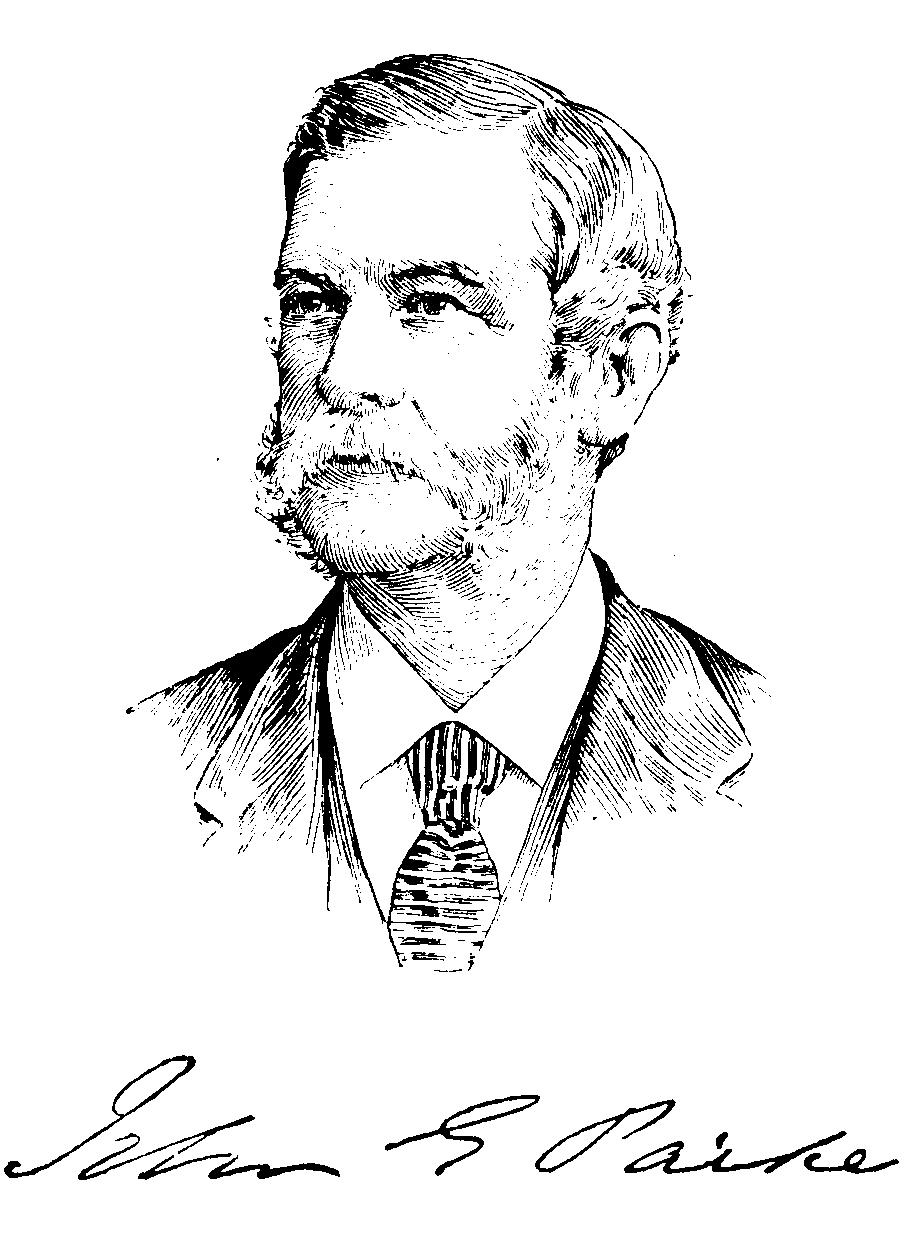
PARKE, John Grubb, soldier, born in Chester county, Pennsylvania, 22 September, 1827. He was graduated at the United States military academy in 1849, and assigned to the topographical engineers. In 1849-'50 he was engaged in determining the starting-point of the boundaryline between Iowa and Minnesota, and subsequently on the survey of the Little Colorado river, and in charge of surveys for a Pacific railroad on the thirty second parallel. He became 1st lieutenant of topographical engineers on 1 July, 1856, and was chief astronomer " and surveyor in the delimitation of the northwestern boundary between the United States and British America from 2 March, 1857, till the beginning of the civil war. He was promoted cap-rain of topographical engineers on 9 September, 1861, and appointed brigadier-general of volunteers on 23 November In the beginning of 1862 he accompanied General Ambrose E. Burnside's expedition to North Carolina, receiving the brevet of lieutenant-colonel in the United States army for services in the capture of Fort Macon. He was promoted major-general of volunteers on 18 July, 1862, and served as chief of staff of the 9th corps during the Maryland campaign, being engaged at South Mountain and Antietam, and in the pursuit of the enemy to Warrenton. When General Burnside took command of the Army of the Potomac, General Parke was re-rained as his chief of staff, and was present at the battle of Fredericksburg. He participated in the movement of the 9th corps into Kentucky, and commanded it on the march to Vicksburg, arriving before the surrender. In the reoccupation of Jackson, Mississippi, he was in command of the left wing of General Sherman's army, receiving the brevet of colonel for his part in the operations. In the East Tennessee campaign he was engaged at Blue Spring in the defence of Knoxville. for which he was subsequently brevetted brigadier-general, and in the following operations against General James Longstreet, after General Burnside resumed command of the corps, he led one of its divisions., and in the Richmond campaign of the Army of the Potomac he was engaged at, the battle of the Wilderness and the combats around Spottsylvania, but was then disabled by illness until 13 August, 1864, when he resumed command of the 9th corps before Petersburg. He was brevetted major-general in the United States army for repelling the enemy's assault on Fort Steadman, and took part in the pursuit of Lee's army until it surrendered. He had been commissioned as major in the corps of engineers on 17 June, 1864. After commanding the districts of Alexandria and southern New York, he resumed charge of the northwestern boundary survey on 28 September, 1866. He superintended the repair and construction of fortifications in Maryland in 1867-'8, and was on duty in the office of the chief of engineers at Washington, D. C., from 1 June, 1868. He was promoted lieutenant-colonel of engineers on 4 March, 1879, and colonel on 17 March, 1884, and in June, 1887, was appointed superintendent of the United States military academy. He is the author of reports in "Explorations and Surveys for a Railroad Route from the Mississippi River to the Pacific Ocean" (Washington, 1854-'5); also of "Compilations of Laws of the United States relating to Public Works for the Improvement of Rivers and Harbors" (1877 ; revised ed., 1887), and "Laws relating to the Construction of Bridges over Navigable Waters " (1882; revised ed., 1887).
Unauthorized Site:
This site and its contents are not affiliated, connected,
associated with or authorized by the individual, family,
friends, or trademarked entities utilizing any part or
the subject's entire name. Any official or affiliated
sites that are related to this subject will be hyper
linked below upon submission
and Evisum, Inc. review.
Please join us in our mission to incorporate The Congressional Evolution of the United States of America discovery-based curriculum into the classroom of every primary and secondary school in the United States of America by July 2, 2026, the nation’s 250th birthday. , the United States of America: We The
People. Click Here