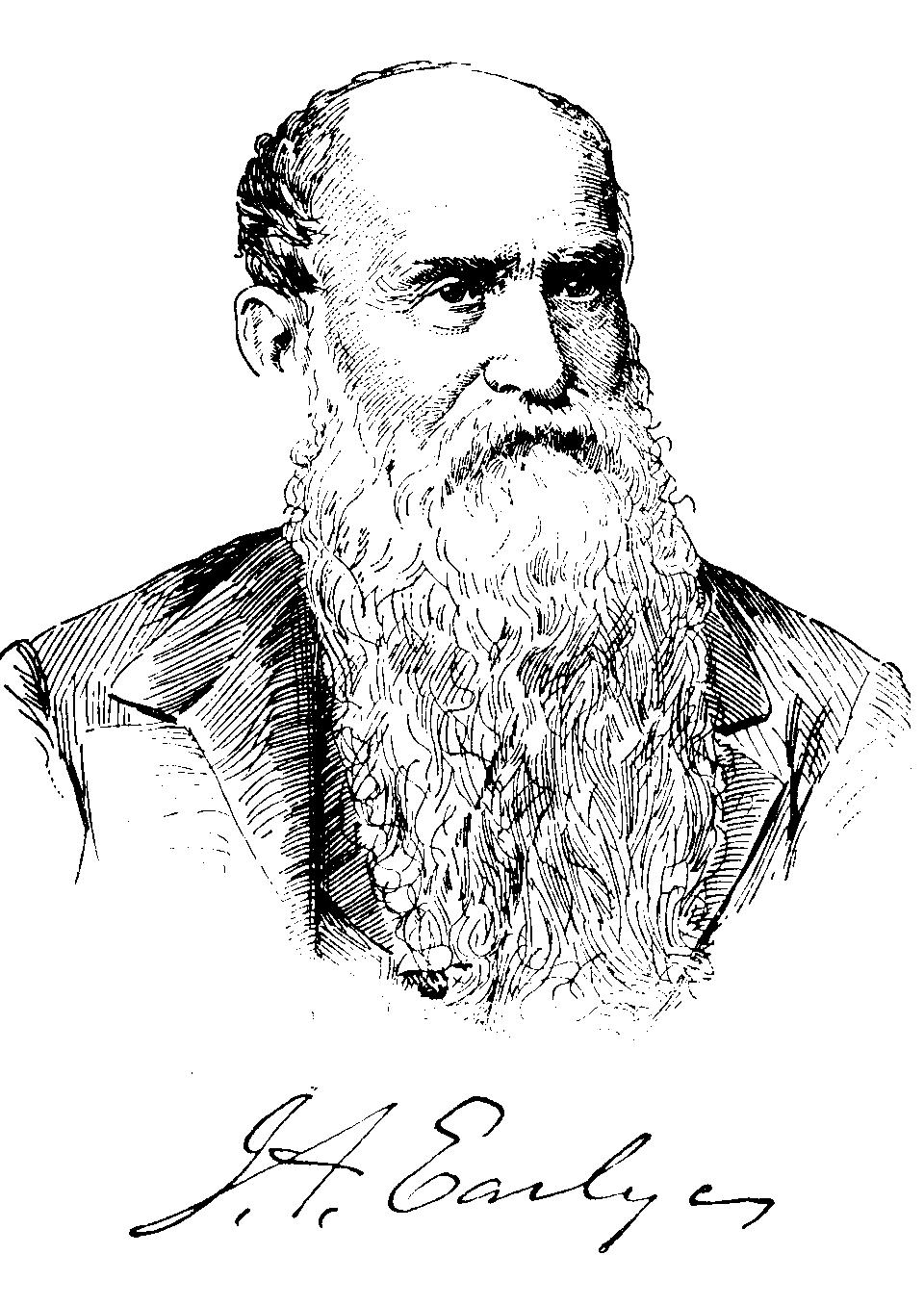
Appleton's Cyclopedia of American Biography, edited by James
Grant Wilson, John Fiske and Stanley L. Klos. Six volumes, New York: D. Appleton
and Company, 1887-1889 and 1999. Virtualology.com warns that these 19th Century
biographies contain errors and bias. We rely on volunteers to edit the historic
biographies on a continual basis. If you would like to edit this biographyplease
submit a rewritten biography in text form.
If acceptable, the new biography will be published above the 19th Century
Appleton's Cyclopedia Biography citing the volunteer editor
Virtual American Biographies
Over 30,000 personalities
with thousands of 19th Century illustrations, signatures, and exceptional life
stories. Virtualology.com
welcomes editing and additions to the
biographies. To become this site's editor or a contributor
Click Here
or e-mail Virtualology here.
EARLY, Jubal Anderson, soldier, born in Franklin County, Virginia, 3 November 1816. He was graduated at the U. S. military academy in 1837, appointed a lieutenant of artillery, and assigned to duty at Fort Monroe, Virginia. He served in the Florida war in 1837'8, resigned from the army in July 1838, and began the practice of law in Virginia. He served in the legislature in 1841'2, and was commonwealth attorney in 1842'7, and again in 1848'52. During the Mexican war he was major of a regiment of Virginia volunteers, serving from January 1847, till August 1848, was acting governor of Monterey in May and June 1847, and after the disbanding of the army returned to the practice of law. At the beginning of the civil war he entered the Confederate service as a colonel, commanded a brigade at Bull Run, and in the battle of Williamsburg, 5 May 1862, was supposed to be mortally wounded. He was promoted brigadier general, and in May 1863, commanded the division that held the lines at Fredericksburg, while Lee was fighting the battle of Chancellorsville. He also commanded a division at Gettysburg.
In 1864 he was ordered to the valley of the Shenandoah, where his operations were at first successful. In July he crossed the Potomac, gained the battle, of Monocacy, and threatened Washington, but was obliged to retreat. Toward the end of the month a portion of his cavalry advanced into Pennsylvania as burg, which, by his orders, they burned, he was afterward, 19 September defeated by Sheridan on the Opequan, and again at Fisher's Hill three days later. On 19 October General Early surprised the National forces at Cedar Creek in the absence of General Sheridan; but the latter, having arrived in the afternoon, rallied his army and gained a decisive victory, General Early losing the greater part of his artillery and trains.
In March 1865, he was totally routed by General Custer at Waynesboro, and a few days later he was relieved by Lee from the command in the valley" that general saying in his letter, 30 March 1865" "Your reverses in the valley, of which the public and the army judge chiefly by the results, have, I fear, impaired your influence both with the people and the soldiers, and would greatly add to the difficulties which will, under any circumstances, attend our military operations in S. W. Virginia. While my own confidence in your ability, zeal, and devotion to the cause is unimpaired, I have nevertheless felt that I could not oppose what seems to be the current opinion without injustice to your reputation and injury to the service." After the close of the war he spent some time in Europe, and on his return resumed the practice of law in Richmond. He subsequently took up his residence in New Orleans (alternately with Lynchburg), where, with General Beauregard, he became a manager of the Louisiana state lottery. He is president of the Southern historical society, and has published a pamphlet entitled "A Memoir of the Last Year of the War for Independence in the Confederate States" (Lynchburg, 1867).
Unauthorized Site:
This site and its contents are not affiliated, connected,
associated with or authorized by the individual, family,
friends, or trademarked entities utilizing any part or
the subject's entire name. Any official or affiliated
sites that are related to this subject will be hyper
linked below upon submission
and Evisum, Inc. review.
Please join us in our mission to incorporate The Congressional Evolution of the United States of America discovery-based curriculum into the classroom of every primary and secondary school in the United States of America by July 2, 2026, the nation’s 250th birthday. , the United States of America: We The
People. Click Here