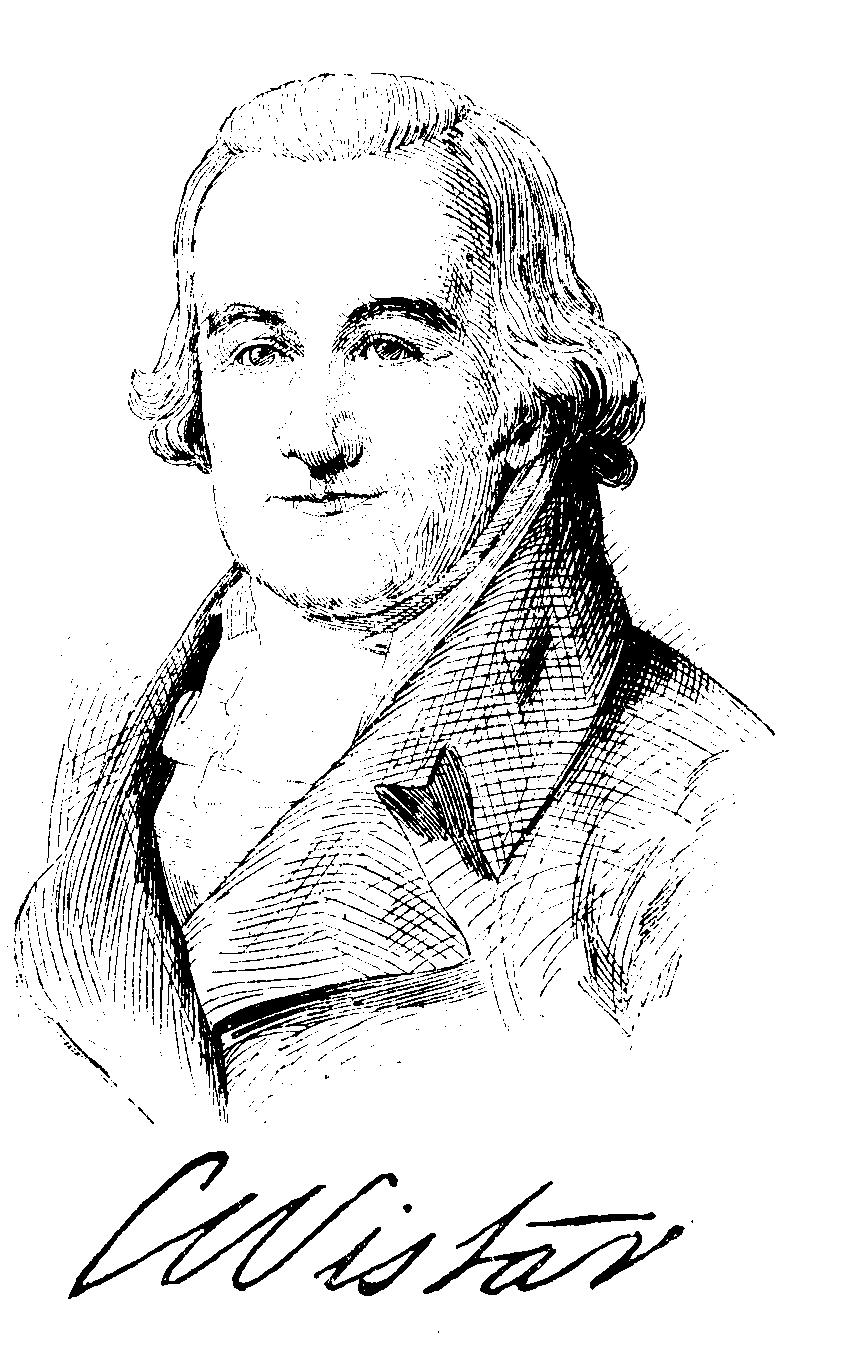
WISTAR, Richard - A Stan Klos Website
WISTAR, Richard, merchant, born in Philadelphia,
Pennsylvania, 20 July, 1756; died there, 6 June, 1821. He was the grandson of
Caspar Wistar, who came to this country from Germany in 1717 and established
near Salem, New Jersey, what is believed to have been the first glass-factory in
the colonies, in the management of which his son was also associated.
In early life Richard turned his attention to
commerce, in which he was eminently successful. He built a large four-storied
store in 1790, where he conducted an iron and hardware business, and with the
profits of this undertaking purchased lands and houses in the vicinity of
Philadelphia, which became exceedingly valuable. During the Revolutionary war he
advocated the defense of his property by arms, which resulted in his being
disowned by the Society of Friends. He was an inspector of prisons, and was one
of the early friends and supporters of the Philadelphia library company and the
Pennsylvania hospital.
--His brother, Caspar Wistar, physician, born in
Philadelphia, Pennsylvania, 13 September, 1761; died there, 22 January, 1818,
was educated at the Friends' School in his native city, where he received a
thorough classical training. His interest in medicine began while he was aiding
in the care of the wounded after the battle of Germantown, and he made his first
studies under the direction of Dr. John Redman. He attended lectures at the
medical department of the University of Pennsylvania, and received the degree of
bachelor of medicine in 1782.
After spending a year, in England, he went to Edinburgh,
where, in 1786, he received his doctorate. While in Scotland he was, for two
successive years, president of the Royal Medical Society of Edinburgh, and also
president of a society for the further investigation of natural history. He
returned to this country in January, 1787, and entered on the practice of his
profession in Philadelphia, where he was at once appointed one of the physicians
to the Philadelphia dispensary.
He was professor of chemistry and the institutes of
medicine in the College of Philadelphia from 1789 till 1792, when the faculty of
that institution united with the medical department of the University of
Pennsylvania, of which he was adjunct professor of anatomy, midwifery, and
surgery until 1808. In that year, on the death of his associate, Dr. William
Shippen, Jr., he was given the chair of anatomy, which he retained until his
death.
His fame attracted students to his lectures, and he was
largely the means of establishing the reputation of the school. Meanwhile he was
chosen physician to the Pennsylvania hospital, where he remained until 1810. His
ability as an anatomist was increased by his description of the posterior
portion of the ethmoid bone with the triangular bones attached, which received
universal recognition as an original treatment of the subject.
It was his habit to throw open his house once every week
in the winter, and at these gatherings students, citizens, scientists, and
travelers met and discussed subjects of interest. These assemblies, celebrated
in the annals of Philadelphia under the title of Wistar parties, were continued
long after his death by other residents of that city.
The College of physicians elected him a fellow in 1787,
and he was appointed one of its censors in 1794, which place he retained until
his death, he was elected a member of the American philosophical society in
1787, was chosen its vice-president in 1795, and on the resignation of Thomas
Jefferson, in 1815, succeeded to the highest office, which he filled during the
remainder of his life.
On the death of Dr. Benjamin Rush, Dr. Wistar succeeded
to the presidency of the Society for the abolition of slavery. The well-known
climbing-shrub, wistaria, which grows wild in the western and southern states,
was named in his honor.
Dr. Wistar contributed papers to the "Transactions of
the College of Physicians" and to the "Transactions of the American
Philosophical Society," and was the author of "A System of Anatomy, for the Use
of Students of Medicine" (2 vols., Philadelphia, 1814, originally published in
parts).
--His son, Isaac Jones Wistar, soldier, born in
Philadelphia, Pennsylvania, 14 November, 1827, was educated at Haverford
college, Pennsylvania, adopted the profession of law, and practiced in
Philadelphia. He entered the National army in 1861, as a captain in a regiment
of Pennsylvania volunteers, and served in Maryland and Virginia, his commission
as brigadier-general of volunteers, dated 29 November, 1862, being granted for
services at Antietam. After the war he resumed practice, and is now president of
a canal company and several coal companies in Pennsylvania.
Edited Appletons Encyclopedia by John Looby, Copyright © 2001
StanKlos.comTM
WISTAR, Richard, merchant, born in Philadelphia, Pennsylvania, 20 July, 1756; died there, 6 June, 1821. He was the grandson of Caspar Wistar, who came to this country from Germany in 1717 and established near Salem, New Jersey, what is believed to have been the first glass-factory in the colonies, in the management of which his son was also associated. In early life Richard turned his attention to commerce, in which he was eminently successful. He built a large four-storied store in 1790, where he conducted an iron and hardware business, and with the profits of this undertaking purchased lands and houses in the vicinity of Philadelphia, which became exceedingly valuable. During the Revolutionary war he advocated the defenee of his property by arms, which resulted in his being disowned by the Society of Friends. He was an inspector of prisons, and was one of the early friends and supporters of the Philadelphia library company and the Pennsylvania hospital.--His brother, Caspar, physician, born in Philadelphia, Pennsylvania, 13 September, 1761; died there, 22 January, 1818, was educated at the Friends' school in his native city, where he received a thorough classical training. His interest in medicine began while he was aiding in the care of the wounded after the battle of Germantown, and he made his first ", studies under the direction of Dr. John Redman. He attended lectures at the medical department of the University of Pennsylvania, and received the degree of bachelor of medicine in 1782. After spending a year, in England, he went to Edinburgh, where, in 1786, he received his doctorate. While in Scotland he was, for two successive years, president of the Royal medical society of Edinburgh, and also president of a society for the further investigation of natural history. He returned to this country in January, 1787, and entered on the practice of his profession in Philadelphia, where he was at once appointed one of the physicians to the Philadelphia dispensary. He was professor of chemistry and the institutes of medicine in the College of Philadelphia from 1789 till 1792, when the faculty of that institution united with the medical department of the University of Pennsylvania, of which he was adjunct professor of anatomy, midwifery, and surgery until 1808. In theft year, on the death of his associate, Dr. William Shippen, Jr., he was given the chair of anatomy, which he retained until his death. His fame attracted students to his lectures, and he was largely the means of establishing the reputation of the school. Meanwhile he was chosen physician to the Pennsylvania hospital, where he remained until 1810. His ability as an anatomist was increased by his description of the posterior portion of the ethmoid bone with the triangular bones attached, which received universal recognition as an original treatment of the subject. It was his habit to throw open his house once every week in the winter, and at these gatherings students, citizens, scientists, and travellers met and discussed subjects of interest. These assemblies, celebrated in the annals of Philadelphia under the title of Wistar parties, were continued long after his death by other residents of that city. The College of physicians elected him a fellow in 178'7, and he was appointed one of its censors in 1794, which place he retained until his death, he was elected a member of the American philosophical society in 1787, was chosen its vice-president in 1795, and on the resignation of Thomas Jefferson, in 1815, succeeded to the highest office, which he filled during the remainder of his life. On the death of Dr. Benjamin Rush, Dr. Wistar succeeded to the presidency of the Society for the abolition of slavery. The well-known climbing-shrub, wistaria, which grows wild in the western and southern states, was named in his honor. Dr. Wistar contributed papers to the "Transactions of the College of Physicians" and to the "Transactions of the American Philosophical Society," and was the author of "A System of Anatomy, for the Use of Students of Medicine" (2 vols., Philadelphia, 1814, originally published in parts).--His son, Isaac Jones, soldier, born in Philadelphia, Pennsylvania, 14 November, 1827, was educated at Haverford college, Pennsylvania, adopted the profession of law, and practised in Philadelphia. He entered the National army in 1861, as a captain in a regiment of Pennsylvania volunteers, and served in Maryland and Virginia, his commission as brigadier-general of volunteers, dated 29 November, 1862, being granted for services at Antietam. After the war he resumed practice, and is now president of a canal company and several coal companies in Pennsylvania.