Appleton's Cyclopedia of American Biography, edited by James
Grant Wilson, John Fiske and Stanley L. Klos. Six volumes, New York: D. Appleton
and Company, 1887-1889 and 1999. Virtualology.com warns that these 19th Century
biographies contain errors and bias. We rely on volunteers to edit the historic
biographies on a continual basis. If you would like to edit this biographyplease
submit a rewritten biography in text form.
If acceptable, the new biography will be published above the 19th Century
Appleton's Cyclopedia Biography citing the volunteer editor
Virtual American Biographies
Over 30,000 personalities
with thousands of 19th Century illustrations, signatures, and exceptional life
stories. Virtualology.com
welcomes editing and additions to the
biographies. To become this site's editor or a contributor
Click Here
or e-mail Virtualology here.
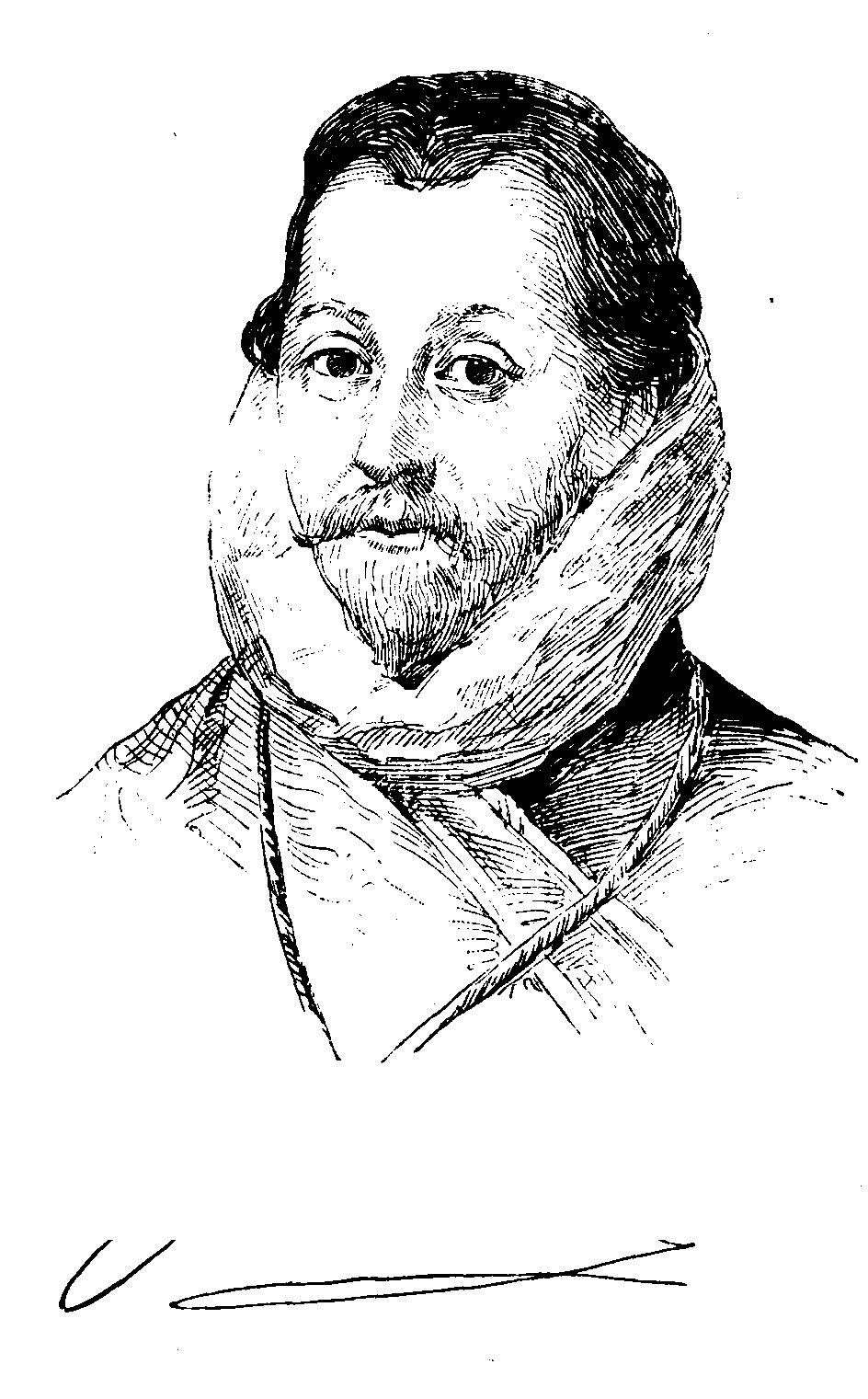
DRAKE, Sir Francis, navigator, born near Tavistook, Devonshire, according to some authorities in 1539, and to others in 1545 or 1546; died near Puerto Belle, 27 December 1595. His father was a poor clergyman, and Francis was the eldest of twelve sons, nearly all of whom followed the sea. He reeeived a scanty education through the liberality of a kinsman, and was apprenticed to the master of a bark, who bequeathed him his vessel as a reward for his faithful service. Being thus at the age of eighteen years not only a good sailor, but the proprietor of a ship, he made commercial voyages to the bay of Biscay and the coast of Guinea. He then sold his vessel and invested the proceeds, with all his savings, in an expedition of Captain Hawkins to Mexico, made in 1567. There were five ships, Drake receiving command of the "Judith," a vessel of fifty tons. The expedition, after capturing 400 or 500 Negroes on the African coast, crossed to Dominica for trade, then attempted to reach Florida, but was driven by tempest into the harbor of San Juan de Ulua (now Vera Cruz) for repairs and supplies.
The next day a fleet of twelve ships arrived from Spain. A naval battle followed, in which only two of the English ships escaped. Drake returned to England, having lost his entire property, and fruitlessly petitioned the court of Spain for indemnity; but getting no satisfaction, and enraged at the: treatment he received, he began to sail with the " avowed object of pillaging the Spaniards.
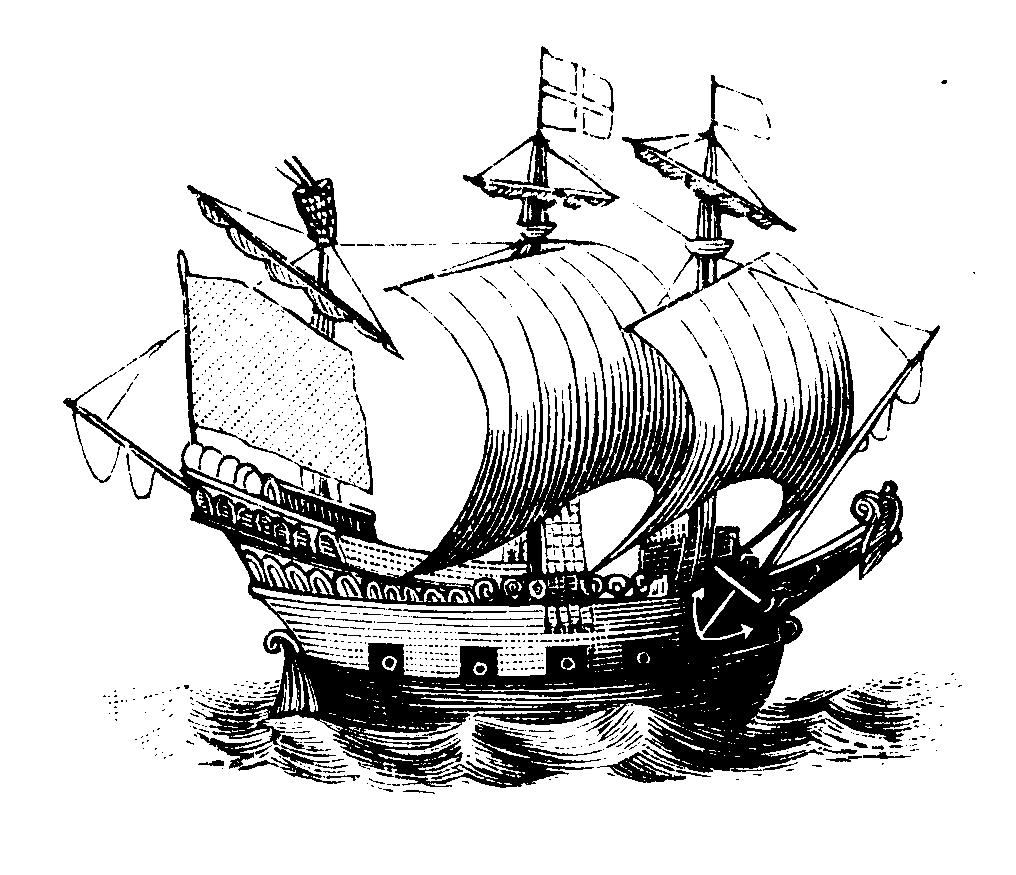
In 1570 he obtained a commission from Queen Elizabeth, h, and in 1572 he armed two ships at Plymouth, with which, joined by a third at Port Pheasant on the coast of South America, he made a descent on New Granada, captured "and plundered various Spanish settlements, and made, at the expense of his enemies, a fortune vastly larger than that they had taken from him. He visited the isthmus of Darien, saw from a mountaintop the waves of the Pacific, and planned an expedition into those waters. He returned to England in 1578, and was welcomed as a hero. Under the patronage of Elizabeth, he set sail from Plymouth, 13 December 1577, with five vessels and 164 gentlemen and sailors, to follow the route that had been traced by Magellan. Of these vessels, the " Pelican" was the only one that completed the adventure. Her armament was twenty guns of brass and iron, with others stowed away in the hold Drake pillaged the Spanish settlements of Chili and Peru and every vessel he found, among them a royal galleon, laden with gold, silver, and precious stones, to the value of about $3,000,000.
He then sailed northward, and, landing on the coast of California, took possession in the name of his sovereign, and named it Nova Albion. He remained for some weeks, and made friends with the natives, who regarded the newcomers as gods. The chief, dressed in furs, came with his official attendants, and indulged in a wild dance. Drake was asked to sit down, and the king, singing with all the rest, set a crown on Drake's head and saluted him as Hioh (" sovereign.") On leaving the place, Drake, fearing lest he should meet the Spaniards in superior force if he returned by the way he came, sailed to the north, and sought a passage to the Atlantic through Bering Strait.
Repelled by the intense cold, he again sought the Pacific, and determined by sailing westward to make the circuit of the globe. He traversed the Pacific and the Indian Ocean, doubled the Cape of Good Hope, and arrived at Plymouth in November 1580, after an absence of two years and ll months. Elizabeth received him with favor, dined on board his ship, and made him a knight. The Spaniards demanded that he should be given up to them as a pirate, but Elizabeth refused, and the rupture that followed between her and Philip II gave Drake a new opportunity.
Within one year he captured and plundered Cartagena and other towns, burned the forts of San Antonio and Saint Augustine, then visited and carried back to England the remains of the colony that Raleigh had planted in Virginia. In 1587 he was placed in command of a fleet of about thirty sail designed to attack the Spanish ports. He destroyed 100 ships in the harbor of Cadiz, which were destined for the invasion of England, and captured an immense carrack, from papers in which the English first learned the value of the East India traffic, and the mode of carrying it on.
In 1588, as vice admiral, he commanded one squadron of the fleet, by winch, with the assistance of the elements; the armada sent by Spain against England was annihilated, and in 1589 ravaged the coasts of the Spanish peninsula. In 1592'3 he was a member of parliament for Plymouth. In 1594, a report having reached England that Spain was preparing a fleet more numerous and powerful than the armada, he again entered the service. Convinced that the West Indies was the point where Spain could be best attacked, he sailed for America in 1595 with 26 vessels, in company with Admiral Hawkins. A divided command produced its usual bad results, and their first attempts were fruitless. The Spaniards were also forewarned, and the English expedition proved a melancholy failure. At Puerto Rico Hawkins died, either of a wound or of chagrin, and Drake then gained new triumphs. He burned Santa Marta, Rancheria, Nombre de Dios, and Rio Hacha; but a fatal malady broke out among the sailors, and as he heard of the defeat of a division of his forces, which he had sent to operate by land, he fell sick and died from the combined effects of fever and of mental agitation on account of the reverses of the expedition. His remains were placed in a leaden casket and buried at sea off Puerto Cabello, Venezuela.
Unauthorized Site:
This site and its contents are not affiliated, connected,
associated with or authorized by the individual, family,
friends, or trademarked entities utilizing any part or
the subject's entire name. Any official or affiliated
sites that are related to this subject will be hyper
linked below upon submission
and Evisum, Inc. review.
Please join us in our mission to incorporate The Congressional Evolution of the United States of America discovery-based curriculum into the classroom of every primary and secondary school in the United States of America by July 2, 2026, the nation’s 250th birthday. , the United States of America: We The
People. Click Here