Student Photo, Fort
Couch Middle School, Upper St. Clair, PA taken November 18, 2000 at the
Historical Society of Western Pennsylvania
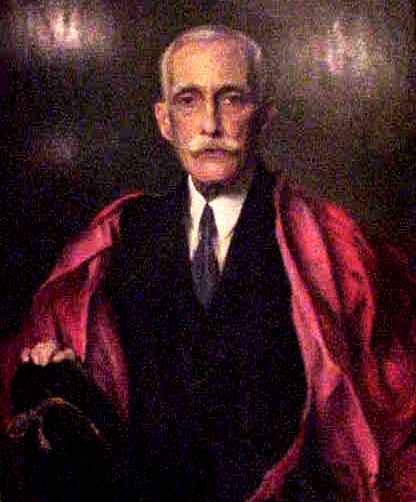
1855-1937
Secretary of the Treasury - 1921-1932
One of the major figures in the industrial and financial development of the kans-Allegheny region, Andrew W. Mellon (1855-1937) was appointed Secretary of the Treasury by President Warren G. Harding in 1921, and he continued to serve under presidents Calvin Coolidge and Herbert Hoover. As the nation embarked on the most materialistic period in its history, Mellon's philosophy was one of deft reduction, tax reduction, and a balanced budget. His tax reform scheme, known as the Mellon Plan, reduced taxes for business.
His theory was that big business would prosper in proportion to the lightening of its tax load and its profit, would be transferred to the rest of the nation. During much of his tenure, general prosperity and times of peace enabled Mellon to implement his measures. The Great Depression, however, beginning in 1929, undercut Mellon's prestige and brought him under increasing criticism. Despite the downturn in the economy, Mellon continued his policy of balancing the budget by cutting spending and increasing taxes, which worsened the effect of the Depression on the ordinary citizen. When Mellon began spending a great deal of time overseas renegotiating World War I debt payments, Hoover relied more and more on Ogden L. Mills, Mellon's Undersecretary, for advice. In 1932 Mellon left Treasury to become Ambassador to Great Britain, and he was replaced by Mills.
- Text Courtesy of the Office
of the Curator
Unauthorized Site:
This site and its contents are not affiliated, connected,
associated with or authorized by the individual, family,
friends, or trademarked entities utilizing any part or
the subject's entire name. Any official or affiliated
sites that are related to this subject will be hyper
linked below upon submission
and Evisum, Inc. review.
Please join us in our mission to incorporate The Congressional Evolution of the United States of America discovery-based curriculum into the classroom of every primary and secondary school in the United States of America by July 2, 2026, the nation’s 250th birthday. , the United States of America: We The
People. Click Here